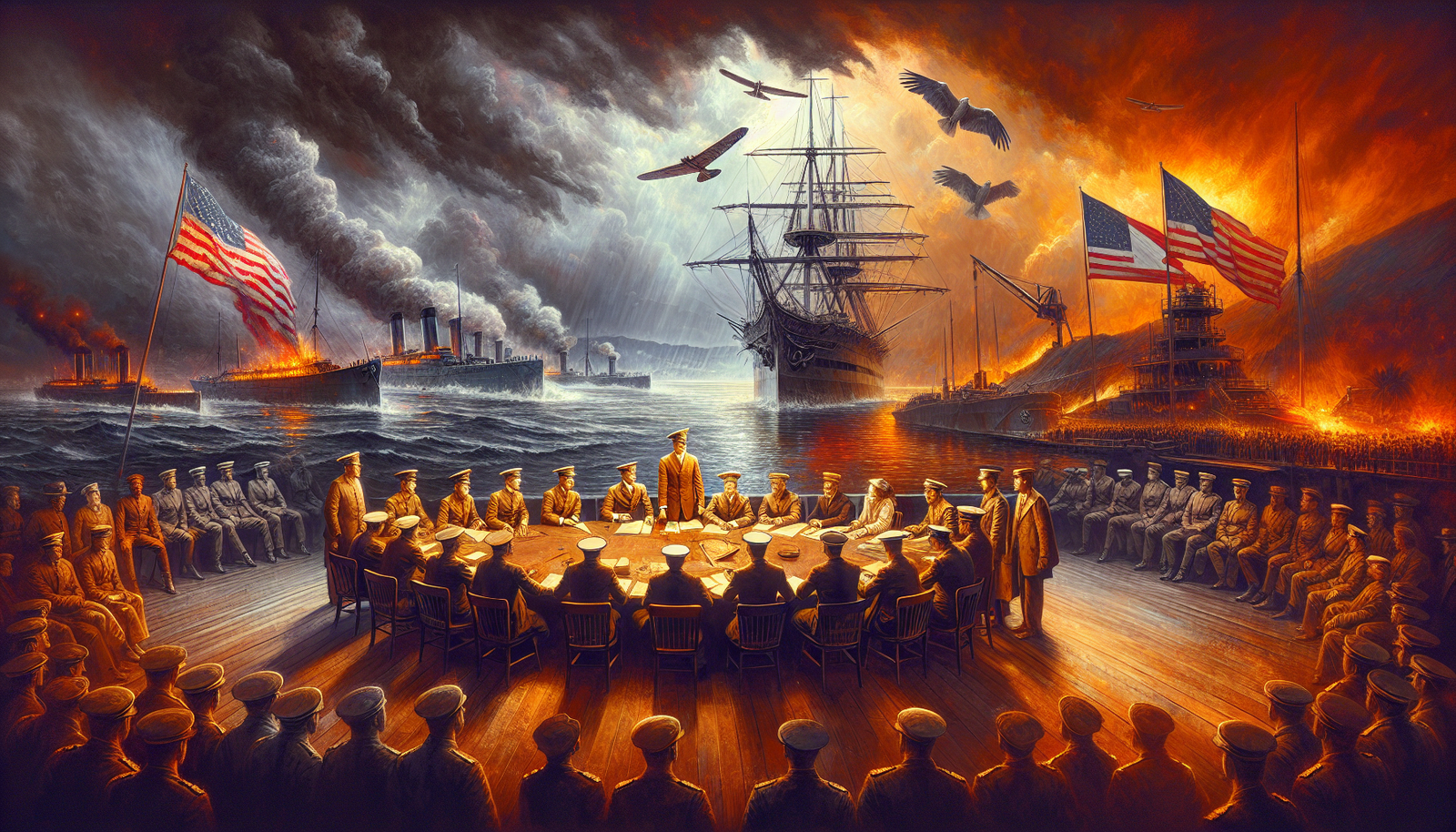
On December 10, 1898, the United States signed a peace treaty that concluded the Spanish-American War, a significant moment in American history. The victory in this conflict, marked by key battles and the sinking of the USS Maine, established the U.S. as a notable military power and ended Spain’s colonial presence in the Americas. The Treaty of Paris resulted in Spain ceding territories such as Guam, Puerto Rico, and the Philippines to the United States, indicating a shift in global power dynamics.
The article highlights the courage and determination of American forces, including the famous Rough Riders, who played key roles in the war’s decisive victories. As the U.S. took on a role as a protector in the Western Hemisphere, it underlines the belief that military strength is crucial for maintaining peace. Celebrating the anniversary of this historical event reinforces a commitment to the principles that shaped American identity, emphasizing resilience and the pursuit of enduring peace.
Additionally, the administration reiterates its commitment to an ‘America First’ vision through diplomatic efforts aimed at promoting peace in conflict regions. This narrative connects the past, where military success facilitated proactive engagement in international relations, with present efforts to resolve long-standing disputes. Observing this anniversary serves as a reminder of historical achievements while also calling for the upholding of values such as strength and unity in addressing modern challenges.
Original: article